
Production Supervisors

Overview

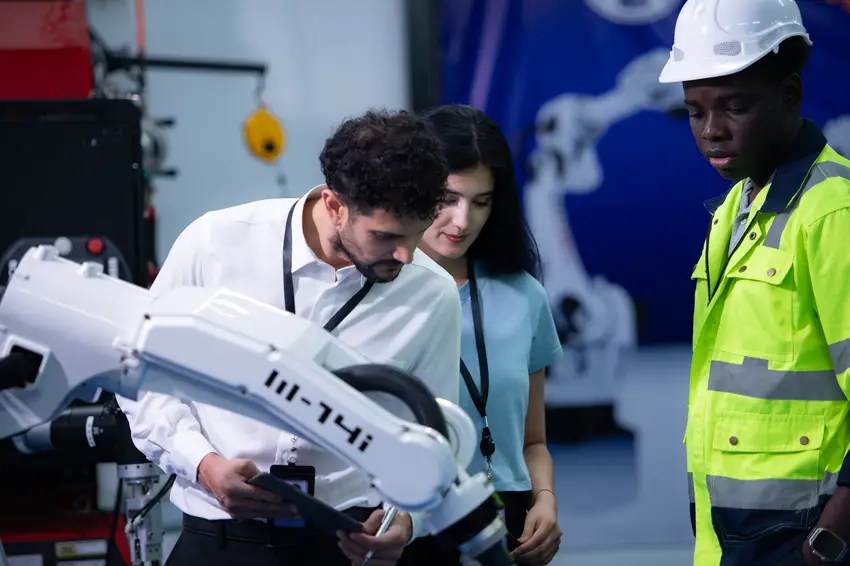
Production supervisors lead teams of workers who make products in factories and manufacturing plants. They ensure quality by inspecting materials and finished goods, enforce safety rules, and train employees on equipment and procedures. Using digital monitoring systems and production software, they coordinate schedules, track performance metrics, and work with other departments to meet production goals. This role combines leadership skills with technical knowledge and often requires a high school diploma plus on-the-job training or an associate degree in manufacturing or business.
Production Supervisors

Did you know?

Production supervisors must maintain thorough knowledge of OSHA regulations and workplace safety standards to ensure compliance and prevent accidents in manufacturing environments.

At a Glance

Median Wage

$71,360.39 Avg/yr

Growth

Stable

Top Skill

Operation and Control

Key Responsibilities

  • Calculate labor and equipment requirements and production specifications, using standard formulas.
  • Determine standards, budgets, production goals, and rates, based on company policies, equipment and labor availability, and workloads.
  • Confer with other supervisors to coordinate operations and activities within or between departments.
  • Plan and develop new products and production processes.
  • Evaluate employee performance.
  • Observe work and monitor gauges, dials, and other indicators to ensure that operators conform to production or processing standards.
  • Maintain operations data, such as time, production, and cost records, and prepare management reports of production results.
  • Enforce safety and sanitation regulations.
  • Read and analyze charts, work orders, production schedules, and other records and reports to determine production requirements and to evaluate current production estimates and outputs.
  • Conduct employee training in equipment operations or work and safety procedures, or assign employee training to experienced workers.
  • Confer with management or subordinates to resolve worker problems, complaints, or grievances.
  • Plan and establish work schedules, assignments, and production sequences to meet production goals.
  • Direct and coordinate the activities of employees engaged in the production or processing of goods, such as inspectors, machine setters, or fabricators.
  • Recommend or implement measures to motivate employees and to improve production methods, equipment performance, product quality, or efficiency.
  • Interpret specifications, blueprints, job orders, and company policies and procedures for workers.
  • Keep records of employees' attendance and hours worked.
  • Recommend or execute personnel actions, such as hirings, evaluations, or promotions.
  • Inspect materials, products, or equipment to detect defects or malfunctions.
  • Set up and adjust machines and equipment.
  • Requisition materials, supplies, equipment parts, or repair services.

Career Considerations

Safety and Regulatory Compliance

Production supervisors must maintain thorough knowledge of OSHA regulations and workplace safety standards to ensure compliance and prevent accidents in manufacturing environments.

Leadership and Team Management

Strong interpersonal skills are essential for effectively managing diverse production teams, resolving conflicts, and motivating workers to meet productivity goals.

Technical Knowledge and Continuous Improvement

Supervisors need to stay current with manufacturing technologies, lean principles, and process optimization techniques to maintain competitive production operations.

Want to dig deeper?

Talk to blinky to learn more.

Start chatting
BETA
New York

25 Kent Ave, Suite 401
Brooklyn, NY
11249


North Carolina

204 N Person
Street. Raleigh, NC
27601

Australia

Level 4/80
Wentworth Ave,
Surry Hills,
Sydney, 2010