Radiologists
Overview
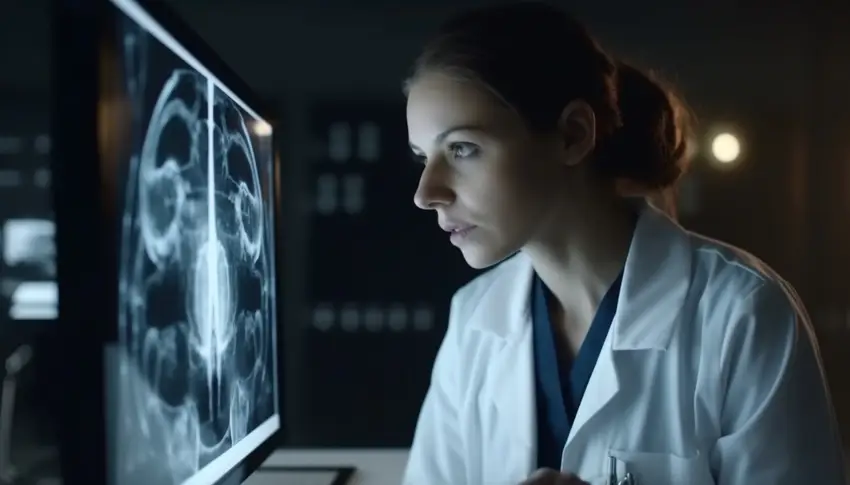
Radiologists are medical doctors who use high-tech imaging equipment like X-rays, MRI machines, CT scanners, and ultrasounds to see inside the human body and diagnose diseases or injuries. They analyze these images to create detailed reports for other doctors, communicate findings to patients and families, and sometimes perform minimally invasive procedures using imaging guidance. This career requires extensive medical education including medical school and specialized residency training, plus strong analytical skills and attention to detail. Many radiologists work in hospitals or imaging centers, often collaborating with teams of technologists and other healthcare professionals in modern, technology-rich environments.
Did you know?
Becoming a radiologist in the US requires completing medical school, a 4-5 year diagnostic radiology residency, and often an additional fellowship, representing over a decade of post-undergraduate training.
At a Glance
Median Wage
$156,770 Avg/yr
Growth
Stable
Top Skill
Reading Comprehension
Key Responsibilities
- Advise other physicians of the clinical indications, limitations, assessments, or risks of diagnostic and therapeutic applications of radioactive materials.
- Provide counseling to radiologic patients to explain the processes, risks, benefits, or alternative treatments.
- Prepare comprehensive interpretive reports of findings.
- Review procedure requests and patients' medical histories to determine applicability of procedures and radioisotopes to be used.
- Develop or monitor procedures to ensure adequate quality control of images.
- Communicate examination results or diagnostic information to referring physicians, patients, or families.
- Monitor handling of radioactive materials to ensure that established procedures are followed.
- Establish and enforce radiation protection standards for patients and staff.
- Calculate, measure, or prepare radioisotope dosages.
- Develop treatment plans for radiology patients.
- Perform interventional procedures such as image-guided biopsy, percutaneous transluminal angioplasty, transhepatic biliary drainage, or nephrostomy catheter placement.
- Obtain patients' histories from electronic records, patient interviews, dictated reports, or by communicating with referring clinicians.
- Check and approve the quality of diagnostic images before patients are discharged.
- Compare nuclear medicine procedures with other types of procedures, such as computed tomography, ultrasonography, nuclear magnetic resonance imaging, and angiography.
- Establish or enforce standards for protection of patients or personnel.
- Instruct radiologic staff in desired techniques, positions, or projections.
- Participate in continuing education activities to maintain and develop expertise.
- Prescribe radionuclides and dosages to be administered to individual patients.
- Teach nuclear medicine, diagnostic radiology, or other specialties at graduate educational level.
- Recognize or treat complications during and after procedures, including blood pressure problems, pain, oversedation, or bleeding.
- Confer with medical professionals regarding image-based diagnoses.
- Test dosage evaluation instruments and survey meters to ensure they are operating properly.
- Formulate plans and procedures for nuclear medicine departments.
- Participate in quality improvement activities including discussions of areas where risk of error is high.
- Administer radioisotopes to clinical patients or research subjects.
- Review or transmit images and information using picture archiving or communications systems.
- Direct nuclear medicine technologists or technicians regarding desired dosages, techniques, positions, and projections.
- Coordinate radiological services with other medical activities.
- Document the performance, interpretation, or outcomes of all procedures performed.
- Perform or interpret the outcomes of diagnostic imaging procedures including magnetic resonance imaging (MRI), computer tomography (CT), positron emission tomography (PET), nuclear cardiology treadmill studies, mammography, or ultrasound.
Career Considerations
Extensive Educational Pathway
Becoming a radiologist in the US requires completing medical school, a 4-5 year diagnostic radiology residency, and often an additional fellowship, representing over a decade of post-undergraduate training.
AI and Technology Integration
The field is rapidly evolving with artificial intelligence and advanced imaging technologies, requiring continuous learning and adaptation to remain competitive in the American healthcare market.
Subspecialization Opportunities
The American radiology market highly values subspecialty training in areas like interventional radiology, neuroradiology, or musculoskeletal imaging, which can significantly impact career prospects and earning potential.