
Rail Car Repairers

Overview

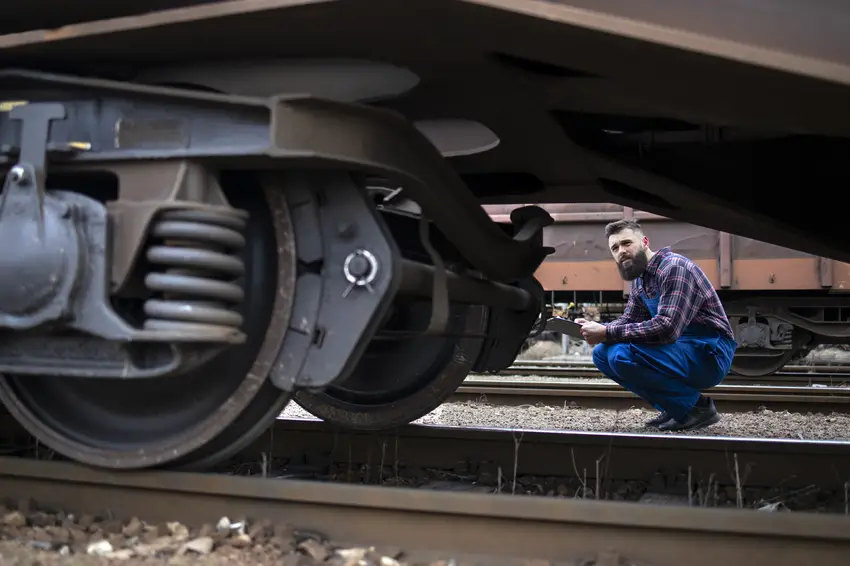
Rail car repairers keep trains running safely by inspecting, maintaining, and fixing railroad cars and locomotives. They use power tools, welding equipment, and specialized machinery to replace worn parts like bearings, wheels, and brake systems, while following strict safety protocols. This hands-on career requires strong mechanical skills and attention to detail, with training typically provided through technical schools or railroad company apprenticeship programs. Many repairers work in rail yards and maintenance facilities, collaborating with teams to ensure trains meet safety standards before returning to service.
Rail Car Repairers

Did you know?

Rail Car Technicians must adhere to strict Federal Railroad Administration (FRA) safety regulations and maintain current certifications to work on railroad equipment.

At a Glance

Median Wage

$65,520 Avg/yr

Growth

Stable

Top Skill

Negotiation

Key Responsibilities

  • Adjust repaired or replaced units as needed to ensure proper operation.
  • Test electrical systems of cars by operating systems and using testing equipment such as ammeters.
  • Repair or replace defective or worn parts such as bearings, pistons, and gears, using hand tools, torque wrenches, power tools, and welding equipment.
  • Disassemble units such as water pumps, control valves, and compressors so that repairs can be made.
  • Inspect components such as bearings, seals, gaskets, wheels, and coupler assemblies to determine if repairs are needed.
  • Repair window sash frames, attach weather stripping and channels to frames, and replace window glass, using hand tools.
  • Align car sides for installation of car ends and crossties, using width gauges, turnbuckles, and wrenches.
  • Perform scheduled maintenance, and clean units and components.
  • Paint car exteriors, interiors, and fixtures.
  • Replace defective wiring and insulation, and tighten electrical connections, using hand tools.
  • Test units for operability before and after repairs.
  • Inspect the interior and exterior of rail cars coming into rail yards to identify defects and to determine the extent of wear and damage.
  • Repair and maintain electrical and electronic controls for propulsion and braking systems.
  • Remove locomotives, car mechanical units, or other components, using pneumatic hoists and jacks, pinch bars, hand tools, and cutting torches.
  • Repair, fabricate, and install steel or wood fittings, using blueprints, shop sketches, and instruction manuals.
  • Examine car roofs for wear and damage, and repair defective sections, using roofing material, cement, nails, and waterproof paint.
  • Install and repair interior flooring, fixtures, walls, plumbing, steps, and platforms.
  • Repair car upholstery.
  • Measure diameters of axle wheel seats, using micrometers, and mark dimensions on axles so that wheels can be bored to specified dimensions.
  • Record conditions of cars, and repair and maintenance work performed or to be performed.

Career Considerations

Safety and Regulatory Compliance

Rail Car Technicians must adhere to strict Federal Railroad Administration (FRA) safety regulations and maintain current certifications to work on railroad equipment.

Physical Demands and Working Conditions

The role requires working outdoors in all weather conditions, lifting heavy equipment, and performing physically demanding tasks in potentially hazardous environments.

Career Advancement Opportunities

The growing American freight and passenger rail industry offers pathways to supervisory roles, specialized technical positions, or locomotive engineer careers.

Want to dig deeper?

Talk to blinky to learn more.

Start chatting
BETA
New York

25 Kent Ave, Suite 401
Brooklyn, NY
11249


North Carolina

204 N Person
Street. Raleigh, NC
27601

Australia

Level 4/80
Wentworth Ave,
Surry Hills,
Sydney, 2010