
Railroad Track Equipment Operators

Overview

Railroad track equipment operators keep train tracks safe and functional by operating specialized machinery to install, repair, and maintain railroad tracks. They use heavy equipment like spike driving machines and rail saws to secure rails, weld track sections together, and patrol assigned areas to spot damage that needs fixing. This hands-on job requires mechanical skills, attention to detail, and the ability to work with hydraulic systems and precision tools. Many operators work for railroad companies, mining operations, or construction crews, often enjoying outdoor work environments and opportunities for career advancement in the transportation industry.
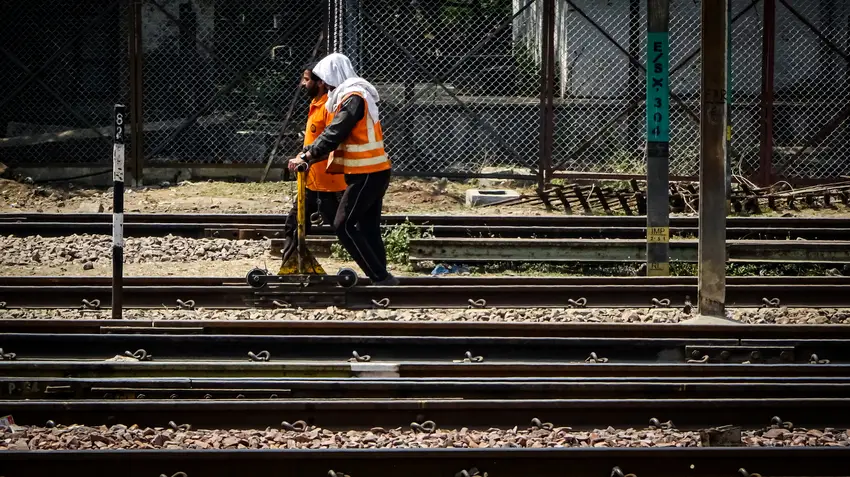
Railroad Track Equipment Operators

Did you know?

Track maintenance operators work in challenging outdoor conditions year-round and must adhere to strict federal safety protocols while operating heavy machinery and working near active rail lines.

At a Glance

Median Wage

$65,805.28 Avg/yr

Growth

Stable

Top Skill

Negotiation

Key Responsibilities

  • Cut rails to specified lengths, using rail saws.
  • Observe leveling indicator arms to verify levelness and alignment of tracks.
  • Dress and reshape worn or damaged railroad switch points or frogs, using portable power grinders.
  • Drill holes through rails, tie plates, or fishplates for insertion of bolts or spikes, using power drills.
  • Operate single- or multiple-head spike pullers to pull old spikes from ties.
  • String and attach wire-guidelines machine to rails so that tracks or rails can be aligned or leveled.
  • Drive vehicles that automatically move and lay tracks or rails over sections of track to be constructed, repaired, or maintained.
  • Turn wheels of machines, using lever controls, to adjust guidelines for track alignments or grades, following specifications.
  • Lubricate machines, change oil, or fill hydraulic reservoirs to specified levels.
  • Clean, grade, or level ballast on railroad tracks.
  • Raise rails, using hydraulic jacks, to allow for tie removal and replacement.
  • Adjust controls of machines that spread, shape, raise, level, or align track, according to specifications.
  • Drive graders, tamping machines, brooms, or ballast spreading machines to redistribute gravel or ballast between rails.
  • Spray ties, fishplates, or joints with oil to protect them from weathering.
  • Operate single- or multiple-head spike driving machines to drive spikes into ties and secure rails.
  • Operate tie-adzing machines to cut ties and permit insertion of fishplates that hold rails.
  • Repair or adjust track switches, using wrenches and replacement parts.
  • Grind ends of new or worn rails to attain smooth joints, using portable grinders.
  • Push controls to close grasping devices on track or rail sections so that they can be raised or moved.
  • Weld sections of track together, such as switch points and frogs.
  • Operate track wrenches to tighten or loosen bolts at joints that hold ends of rails together.
  • Clean or make minor repairs to machines or equipment.
  • Clean tracks or clear ice or snow from tracks or switch boxes.
  • Paint railroad signs, such as speed limits or gate-crossing warnings.
  • Patrol assigned track sections so that damaged or broken track can be located and reported.
  • Engage mechanisms that lay tracks or rails to specified gauges.

Career Considerations

Physical Demands and Safety Requirements

Track maintenance operators work in challenging outdoor conditions year-round and must adhere to strict federal safety protocols while operating heavy machinery and working near active rail lines.

Union Membership and Job Security

Most track maintenance positions in the U.S. are unionized through organizations like the Brotherhood of Maintenance of Way Employes, providing strong job security, benefits, and collective bargaining power.

Federal Training and Certification

Workers must complete Federal Railroad Administration (FRA) mandated training programs and maintain certifications for track inspection, equipment operation, and safety compliance.

Want to dig deeper?

Talk to blinky to learn more.

Start chatting
BETA
New York

25 Kent Ave, Suite 401
Brooklyn, NY
11249


North Carolina

204 N Person
Street. Raleigh, NC
27601

Australia

Level 4/80
Wentworth Ave,
Surry Hills,
Sydney, 2010