
Registered Nurses

Overview

Registered nurses are healthcare heroes who care for patients by assessing their health, giving medications, and monitoring their recovery using advanced medical technology. They work closely with doctors and other healthcare professionals to create treatment plans, operate medical equipment, and teach patients and families about managing health conditions. This career requires strong communication skills, attention to detail, and typically a nursing degree, with opportunities to work in hospitals, clinics, or even from home through telehealth. Modern nurses use electronic health records, smart medical devices, and often collaborate in team-based care environments.
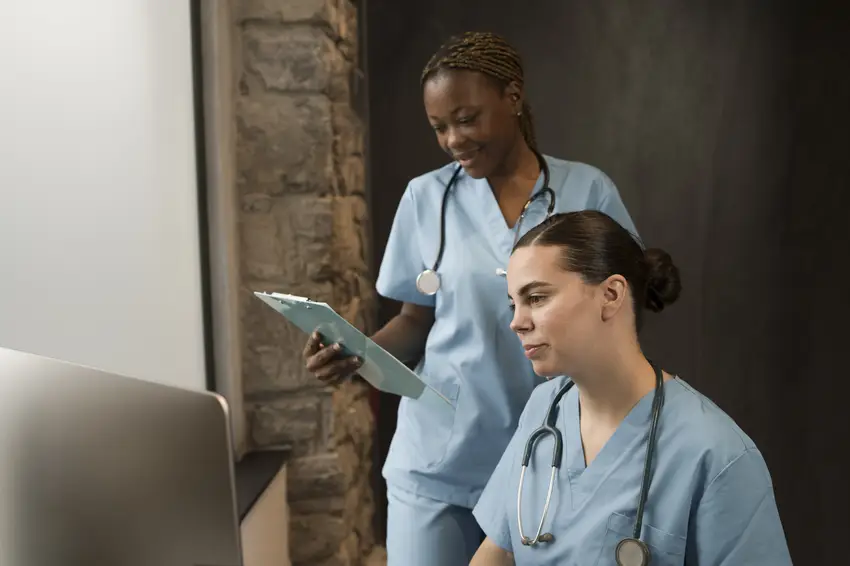
Registered Nurses

Did you know?

Registered Nurses must complete an accredited nursing program and pass the NCLEX-RN exam to obtain state licensure, with many employers preferring BSN degrees.

At a Glance

Median Wage

$90,458.43 Avg/yr

Growth

Fast Growing

Top Skill

Systems Analysis

Key Responsibilities

  • Consult with institutions or associations regarding issues or concerns relevant to the practice and profession of nursing.
  • Engage in research activities related to nursing.
  • Prescribe or recommend drugs, medical devices, or other forms of treatment, such as physical therapy, inhalation therapy, or related therapeutic procedures.
  • Prepare patients for and assist with examinations or treatments.
  • Administer medications to patients and monitor patients for reactions or side effects.
  • Order, interpret, and evaluate diagnostic tests to identify and assess patient's condition.
  • Monitor all aspects of patient care, including diet and physical activity.
  • Prepare rooms, sterile instruments, equipment, or supplies and ensure that stock of supplies is maintained.
  • Assess the needs of individuals, families, or communities, including assessment of individuals' home or work environments, to identify potential health or safety problems.
  • Instruct individuals, families, or other groups on topics such as health education, disease prevention, or childbirth and develop health improvement programs.
  • Record patients' medical information and vital signs.
  • Maintain accurate, detailed reports and records.
  • Conduct specified laboratory tests.
  • Direct or supervise less-skilled nursing or healthcare personnel or supervise a particular unit.
  • Observe nurses and visit patients to ensure proper nursing care.
  • Refer students or patients to specialized health resources or community agencies furnishing assistance.
  • Provide or arrange for training or instruction of auxiliary personnel or students.
  • Inform physician of patient's condition during anesthesia.
  • Perform administrative or managerial functions, such as taking responsibility for a unit's staff, budget, planning, or long-range goals.
  • Provide health care, first aid, immunizations, or assistance in convalescence or rehabilitation in locations such as schools, hospitals, or industry.
  • Modify patient treatment plans as indicated by patients' responses and conditions.
  • Work with individuals, groups, or families to plan or implement programs designed to improve the overall health of communities.
  • Direct or coordinate infection control programs, advising or consulting with specified personnel about necessary precautions.
  • Consult and coordinate with healthcare team members to assess, plan, implement, or evaluate patient care plans.
  • Administer local, inhalation, intravenous, or other anesthetics.
  • Perform physical examinations, make tentative diagnoses, and treat patients en route to hospitals or at disaster site triage centers.
  • Monitor, record, and report symptoms or changes in patients' conditions.

Career Considerations

Educational and Licensing Requirements

Registered Nurses must complete an accredited nursing program and pass the NCLEX-RN exam to obtain state licensure, with many employers preferring BSN degrees.

High Demand and Job Security

The nursing profession offers excellent job security with projected growth of 6% from 2022-2032, driven by an aging population and healthcare expansion.

Demanding Work Environment

Nursing involves physically and emotionally demanding work with long shifts, high-stress situations, and the need for continuous learning to keep up with medical advances.

Want to dig deeper?

Talk to blinky to learn more.

Start chatting
BETA
New York

25 Kent Ave, Suite 401
Brooklyn, NY
11249


North Carolina

204 N Person
Street. Raleigh, NC
27601

Australia

Level 4/80
Wentworth Ave,
Surry Hills,
Sydney, 2010