
Robotics Maintenance Technicians

Overview

Robotics Maintenance Technicians build, install, program, and repair robots and automated machines used in factories, labs, and warehouses. They wire and test components, use tools like oscilloscopes and electronic voltmeters to track down problems, and adjust robot paths so the machines work safely, quickly, and accurately. They also create 3D simulations, update software in programmable controllers, and work with engineers to improve how entire robotic systems perform over time.
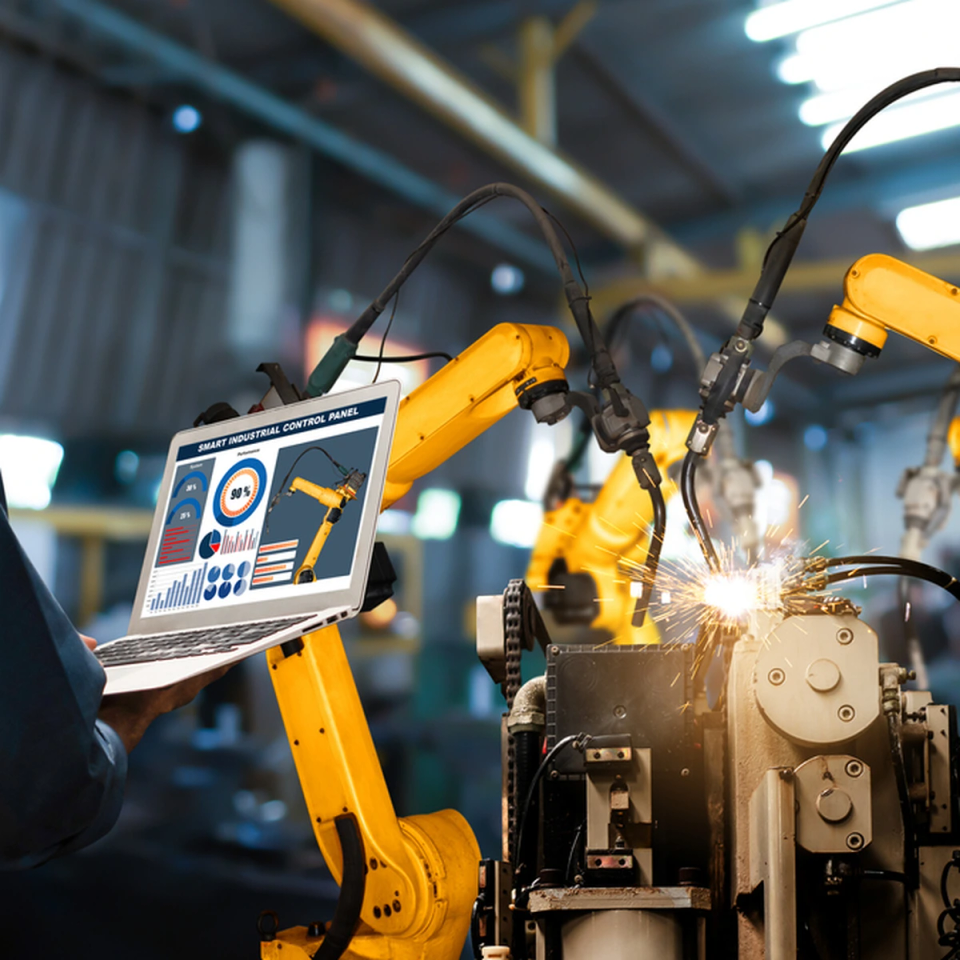
Robotics Maintenance Technicians

Did you know?

Most positions require an associate degree in robotics, electronics, or mechanical engineering technology, with industry certifications from organizations like the Robotics Industries Association enhancing job prospects.

At a Glance

Growth

Stable

Top Skill

Science

Key Responsibilities

  • Modify computer-controlled robot movements.
  • Perform preventive or corrective maintenance on robotic systems or components.
  • Train customers or other personnel to install, use, or maintain robots.
  • Troubleshoot robotic systems, using knowledge of microprocessors, programmable controllers, electronics, circuit analysis, mechanics, sensor or feedback systems, hydraulics, or pneumatics.
  • Maintain inventories of robotic production supplies, such as sensors or cables.
  • Fabricate housings, jigs, fittings, or fixtures, using metalworking machines.
  • Inspect installation sites.
  • Align, fit, or assemble components, using hand tools, power tools, fixtures, templates, or microscopes.
  • Develop robotic path motions to maximize efficiency, safety, and quality.
  • Install, program, or repair programmable controllers, robot controllers, end-of-arm tools, or conveyors.
  • Train robots, using artificial intelligence software or interactive training techniques, to perform simple or complex tasks, such as designing and carrying out a series of iterative tests of chemical samples.
  • Make repairs to robots or peripheral equipment, such as replacement of defective circuit boards, sensors, controllers, encoders, or servomotors.
  • Evaluate the efficiency and reliability of industrial robotic systems, reprogramming or calibrating to achieve maximum quantity and quality.
  • Program complex robotic systems, such as vision systems.
  • Build or assemble robotic devices or systems.
  • Develop three-dimensional simulations of automation systems.
  • Install new robotic systems in stationary positions or on tracks.
  • Maintain service records of robotic equipment or automated production systems.
  • Assist engineers in the design, configuration, or application of robotic systems.
  • Document robotics test procedures and results.
  • Test performance of robotic assemblies, using instruments such as oscilloscopes, electronic voltmeters, or bridges.
  • Attach wires between controllers.

Career Considerations

Educational Requirements and Certification

Most positions require an associate degree in robotics, electronics, or mechanical engineering technology, with industry certifications from organizations like the Robotics Industries Association enhancing job prospects.

Strong Job Growth and Industry Demand

The Bureau of Labor Statistics projects faster-than-average growth for this field due to increasing automation across American manufacturing, healthcare, and logistics industries.

Continuous Technical Skill Development

Success requires staying current with rapidly evolving technologies including AI integration, programming languages like Python and C++, and emerging robotic platforms.

Want to dig deeper?

Talk to blinky to learn more.

Start chatting
BETA
New York

25 Kent Ave, Suite 401
Brooklyn, NY
11249


North Carolina

204 N Person
Street. Raleigh, NC
27601

Australia

Level 4/80
Wentworth Ave,
Surry Hills,
Sydney, 2010