Security Supervisors
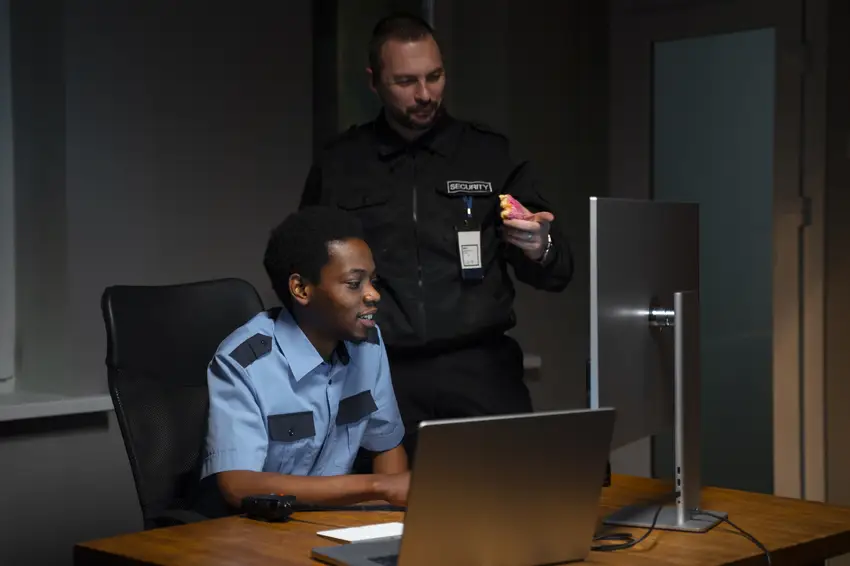
Security supervisors lead teams of security guards and manage safety operations at various locations like offices, malls, or events. They coordinate patrols, respond to emergencies, investigate incidents, and use modern security technology like surveillance cameras, access control systems, and alarm monitoring software. This role requires strong leadership skills, quick decision-making abilities, and often involves collaborating with law enforcement and emergency services. Many security supervisors start as security guards and advance through experience, with opportunities for certification programs and criminal justice education.
Did you know?
Obtaining industry-recognized certifications like CISSP, CISM, or CISA is highly valued by American employers and often required for senior security leadership positions.
At a glance
Typical average pay
$58,600 Avg/yr
Growth
Stable
Top skill
Active Listening
Things to consider
Leadership and Management Skills
Developing strong people management capabilities is essential as the role involves leading technical teams, managing budgets, and communicating security strategies to executive leadership.
Regulatory Compliance Knowledge
Understanding US-specific regulations such as SOX, HIPAA, PCI-DSS, and state privacy laws is crucial for ensuring organizational compliance and avoiding costly penalties.
Key responsibilities
Investigate disturbances on the premises, such as security alarms, altercations, and suspicious activity.
Advise employees in handling problems or resolving complaints from customers, tenants, detainees, or other persons.
Patrol the premises to prevent or detect intrusion, protect property, or preserve order.
Recruit, interview, and hire security personnel.
Apprehend or evict trespassers, rule violators, or other security threats from the premises.