
Semiconductor Processing Technicians

Overview

Semiconductor processing technicians help manufacture the tiny computer chips that power everything from smartphones to gaming consoles. You'll operate specialized equipment to grow silicon crystals, cut them into ultra-thin wafers, and use chemical baths and precision tools to create the microscopic circuits that make electronics work. This job requires attention to detail and technical skills as you work in ultra-clean facilities, collaborating with engineers and other technicians to ensure each chip meets exact specifications. Many technicians start with a high school diploma and receive on-the-job training or pursue an associate degree in electronics or engineering technology.
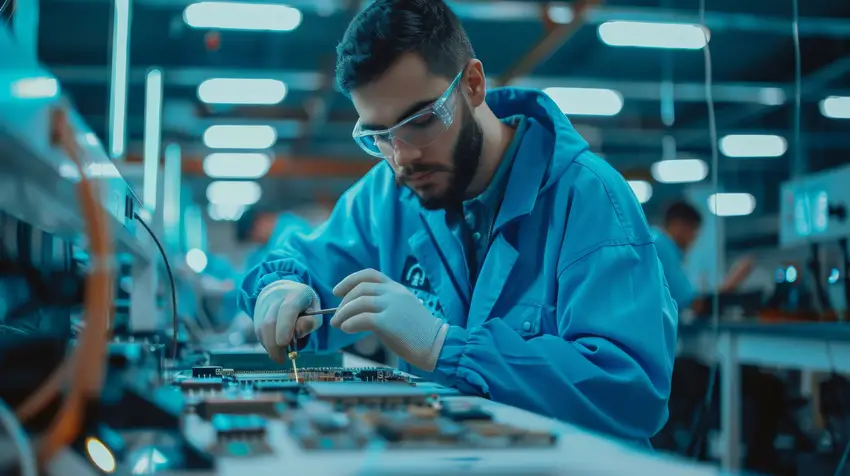
Semiconductor Processing Technicians

Did you know?

Most positions require an associate degree in electronics, engineering technology, or completion of specialized semiconductor manufacturing programs offered by community colleges and technical schools across the US.

At a Glance

Median Wage

$48,839.44 Avg/yr

Growth

Fast Growing

Top Skill

Operation and Control

Key Responsibilities

  • Manipulate valves, switches, and buttons, or key commands into control panels to start semiconductor processing cycles.
  • Clean and maintain equipment, including replacing etching and rinsing solutions and cleaning bath containers and work area.
  • Measure and weigh amounts of crystal growing materials, mix and grind materials, load materials into container, and monitor processing procedures to help identify crystal growing problems.
  • Monitor operation and adjust controls of processing machines and equipment to produce compositions with specific electronic properties, using computer terminals.
  • Inspect equipment for leaks, diagnose malfunctions, and request repairs.
  • Scribe or separate wafers into dice.
  • Set, adjust, and readjust computerized or mechanical equipment controls to regulate power level, temperature, vacuum, and rotation speed of furnace, according to crystal growing specifications.
  • Clean semiconductor wafers using cleaning equipment, such as chemical baths, automatic wafer cleaners, or blow-off wands.
  • Count, sort, and weigh processed items.
  • Etch, lap, polish, or grind wafers or ingots to form circuitry and change conductive properties, using etching, lapping, polishing, or grinding equipment.
  • Load and unload equipment chambers and transport finished product to storage or to area for further processing.
  • Inspect materials, components, or products for surface defects and measure circuitry, using electronic test equipment, precision measuring instruments, microscope, and standard procedures.
  • Calculate etching time based on thickness of material to be removed from wafers or crystals.
  • Align photo mask pattern on photoresist layer, expose pattern to ultraviolet light, and develop pattern, using specialized equipment.
  • Study work orders, instructions, formulas, and processing charts to determine specifications and sequence of operations.
  • Maintain processing, production, and inspection information and reports.
  • Place semiconductor wafers in processing containers or equipment holders, using vacuum wand or tweezers.
  • Connect reactor to computer, using hand tools and power tools.
  • Stamp, etch, or scribe identifying information on finished component according to specifications.
  • Load semiconductor material into furnace.

Career Considerations

Educational Requirements and Training

Most positions require an associate degree in electronics, engineering technology, or completion of specialized semiconductor manufacturing programs offered by community colleges and technical schools across the US.

Cleanroom Work Environment

The job requires working in sterile cleanroom facilities wearing protective suits for extended periods, demanding attention to detail and adherence to strict contamination control protocols.

Industry Growth and Job Security

The semiconductor industry in America is experiencing significant growth due to government initiatives like the CHIPS Act, creating strong job prospects and competitive salaries in key tech hubs.

Want to dig deeper?

Talk to blinky to learn more.

Start chatting
BETA
New York

25 Kent Ave, Suite 401
Brooklyn, NY
11249


North Carolina

204 N Person
Street. Raleigh, NC
27601

Australia

Level 4/80
Wentworth Ave,
Surry Hills,
Sydney, 2010