
Soil and Plant Scientists

Overview

Soil and Plant Scientists are like detectives for the natural world, studying how plants grow and what makes soil healthy. They conduct experiments to develop better crops that can resist diseases and grow in different climates, while also creating environmentally safe ways to control pests and weeds. Using modern lab equipment and field technology, they analyze soil chemistry and test new farming methods to help farmers grow more food sustainably. This career combines outdoor fieldwork with laboratory research and often involves collaborating with farmers, environmental groups, and other scientists.
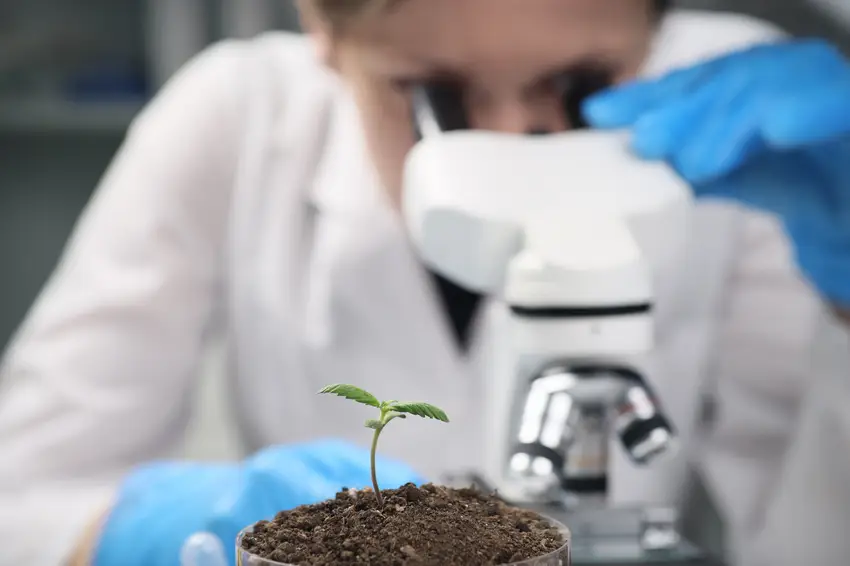
Soil and Plant Scientists

Did you know?

Most positions require a Master's or PhD in soil science, agronomy, or related fields, with strong emphasis on research experience and publication records.

At a Glance

Median Wage

$71,256.74 Avg/yr

Growth

Fast Growing

Top Skill

Science

Key Responsibilities

  • Develop new or improved methods or products for controlling or eliminating weeds, crop diseases, or insect pests.
  • Investigate soil problems or poor water quality to determine sources and effects.
  • Investigate responses of soils to specific management practices to determine the use capabilities of soils and the effects of alternative practices on soil productivity.
  • Consult with engineers or other technical personnel working on construction projects about the effects of soil problems and possible solutions to these problems.
  • Plan or supervise land conservation or reclamation programs for industrial development projects.
  • Study soil characteristics to classify soils on the basis of factors such as geographic location, landscape position, or soil properties.
  • Perform chemical analyses of the microorganism content of soils to determine microbial reactions or chemical mineralogical relationships to plant growth.
  • Provide information or recommendations to farmers or other landowners regarding ways in which they can best use land, promote plant growth, or avoid or correct problems such as erosion.
  • Identify degraded or contaminated soils and develop plans to improve their chemical, biological, or physical characteristics.
  • Conduct experiments to investigate the underlying mechanisms of plant growth and response to the environment.
  • Develop improved measurement techniques, soil conservation methods, soil sampling devices, or related technology.
  • Conduct experiments investigating how soil forms, changes, or interacts with land-based ecosystems or living organisms.
  • Develop ways of altering soils to suit different types of plants.
  • Research technical requirements or environmental impacts of urban green spaces, such as green roof installations.
  • Conduct experiments regarding causes of bee diseases or factors affecting yields of nectar or pollen.
  • Plan or supervise waste management programs for composting or farming.
  • Communicate research or project results to other professionals or the public or teach related courses, seminars, or workshops.
  • Conduct research to determine best methods of planting, spraying, cultivating, harvesting, storing, processing, or transporting horticultural products.
  • Study ways to improve agricultural sustainability, such as the use of new methods of composting.
  • Identify or classify species of insects or allied forms, such as mites or spiders.
  • Conduct research into the use of plant species as green fuels or in the production of green fuels.
  • Survey undisturbed or disturbed lands for classification, inventory, mapping, environmental impact assessments, environmental protection planning, conservation planning, or reclamation planning.
  • Develop methods of conserving or managing soil that can be applied by farmers or forestry companies.
  • Conduct experiments to develop new or improved varieties of field crops, focusing on characteristics such as yield, quality, disease resistance, nutritional value, or adaptation to specific soils or climates.
  • Develop environmentally safe methods or products for controlling or eliminating weeds, crop diseases, or pests.
  • Study insect distribution or habitat and recommend methods to prevent importation or spread of injurious species.
  • Provide advice regarding the development of regulatory standards for land reclamation or soil conservation.

Career Considerations

Advanced Degree Requirements

Most positions require a Master's or PhD in soil science, agronomy, or related fields, with strong emphasis on research experience and publication records.

Federal Employment Opportunities

Significant career opportunities exist with government agencies like USDA and EPA, offering job security and benefits but requiring navigation of federal hiring processes.

Geographic Mobility

Career advancement often requires willingness to relocate to agricultural regions, university towns, or research facilities across different states.

Want to dig deeper?

Talk to blinky to learn more.

Start chatting
BETA
New York

25 Kent Ave, Suite 401
Brooklyn, NY
11249


North Carolina

204 N Person
Street. Raleigh, NC
27601

Australia

Level 4/80
Wentworth Ave,
Surry Hills,
Sydney, 2010