
Special Education Teaching Assistants

Overview

Special Education Teaching Assistants work side by side with special education teachers to support students who have learning, emotional, or physical disabilities. They help plan and deliver lessons, tutor students in small groups, track progress using data sheets or computer programs, and use tools like communication devices, visual schedules, and adapted keyboards so students can participate fully in class and daily life. They also guide students in social skills and everyday tasks—such as organizing materials, using school equipment safely, or practicing hygiene—while helping keep classrooms, hallways, and field trips safe, organized, and welcoming for everyone.
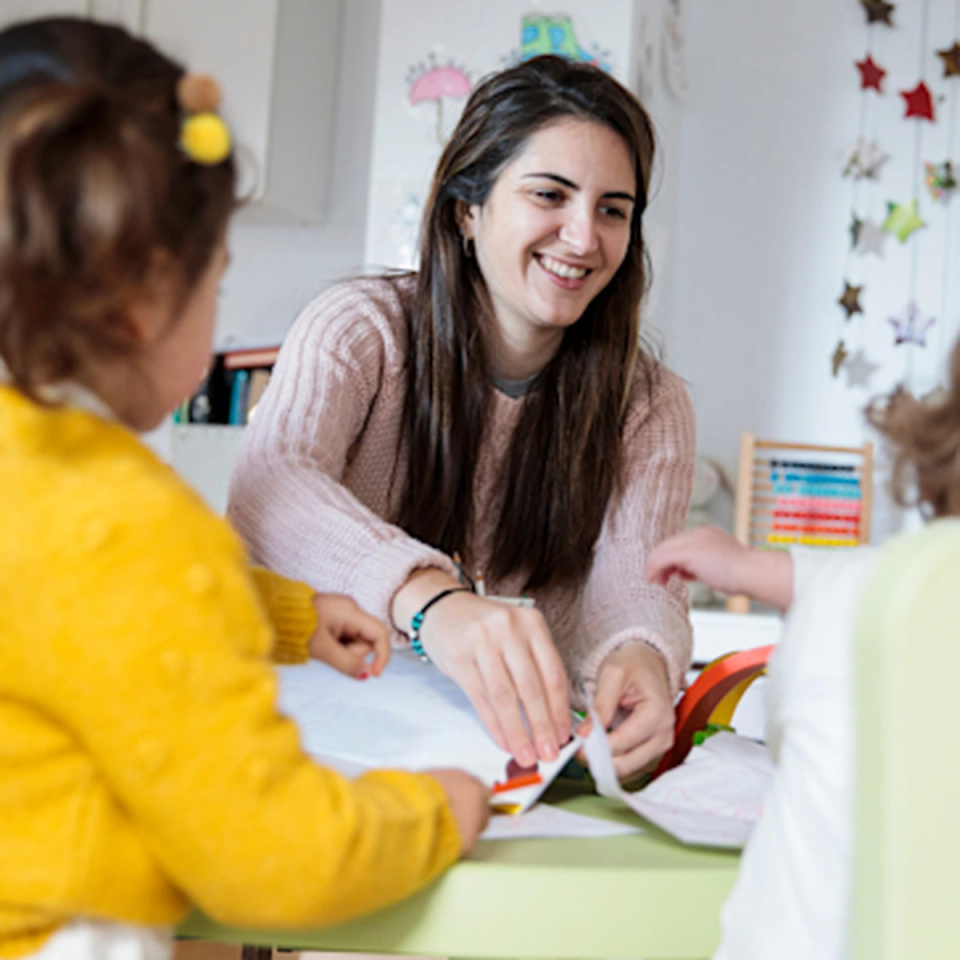
Special Education Teaching Assistants

Did you know?

Most states require completion of a paraprofessional training program and passing a competency exam to work as a special education teaching assistant.

At a Glance

Growth

Stable

Top Skill

Equipment Maintenance

Key Responsibilities

  • Laminate teaching materials to increase their durability under repeated use.
  • Attend staff meetings and serve on committees, as required.
  • Instruct and monitor students in the use and care of equipment and materials to prevent injuries and damage.
  • Assist in bus loading and unloading.
  • Requisition and stock teaching materials and supplies.
  • Observe students' performance, and record relevant data to assess progress.
  • Supervise students in classrooms, halls, cafeterias, school yards, and gymnasiums, or on field trips.
  • Employ special educational strategies or techniques during instruction to improve the development of sensory- and perceptual-motor skills, language, cognition, or memory.
  • Present subject matter to students under the direction and guidance of teachers, using lectures, discussions, supervised role-playing methods, or by reading aloud.
  • Use computers, audio-visual aids, and other equipment and materials to supplement presentations.
  • Carry out therapeutic regimens, such as behavior modification and personal development programs, under the supervision of special education instructors, psychologists, or speech-language pathologists.
  • Clean classrooms.
  • Enforce administration policies and rules governing students.
  • Tutor and assist children individually or in small groups to help them master assignments and to reinforce learning concepts presented by teachers.
  • Prepare lesson materials, bulletin board displays, exhibits, equipment, and demonstrations.
  • Instruct students in daily living skills required for independent maintenance and self-sufficiency, such as hygiene, safety, or food preparation.
  • Assist librarians in school libraries.
  • Grade homework and tests, and compute and record results, using answer sheets or electronic marking devices.
  • Discuss assigned duties with classroom teachers to coordinate instructional efforts.
  • Prepare classrooms with a variety of materials or resources for children to explore, manipulate, or use in learning activities or imaginative play.
  • Provide students with disabilities with assistive devices, supportive technology, and assistance accessing facilities, such as restrooms.
  • Organize and label materials and display students' work in a manner appropriate for their eye levels and perceptual skills.
  • Provide assistance to students with special needs.
  • Distribute teaching materials, such as textbooks, workbooks, papers, and pencils, to students.
  • Teach socially acceptable behavior, employing techniques such as behavior modification or positive reinforcement.
  • Maintain computers in classrooms and laboratories, and assist students with hardware and software use.
  • Participate in teacher-parent conferences regarding students' progress or problems.
  • Prepare lesson outlines and plans in assigned subject areas and submit outlines to teachers for review.
  • Organize and supervise games and other recreational activities to promote physical, mental, and social development.
  • Take class attendance and maintain attendance records.

Career Considerations

State Certification Requirements

Most states require completion of a paraprofessional training program and passing a competency exam to work as a special education teaching assistant.

Emotional and Physical Demands

The role requires strong emotional resilience and physical stamina to manage challenging behaviors and provide hands-on support to students with diverse disabilities.

Professional Development Opportunities

Many school districts offer pathways for teaching assistants to pursue additional education and certification to become licensed special education teachers.

Want to dig deeper?

Talk to blinky to learn more.

Start chatting
BETA
New York

25 Kent Ave, Suite 401
Brooklyn, NY
11249


North Carolina

204 N Person
Street. Raleigh, NC
27601

Australia

Level 4/80
Wentworth Ave,
Surry Hills,
Sydney, 2010