
Structural Iron and Steel Workers

Overview

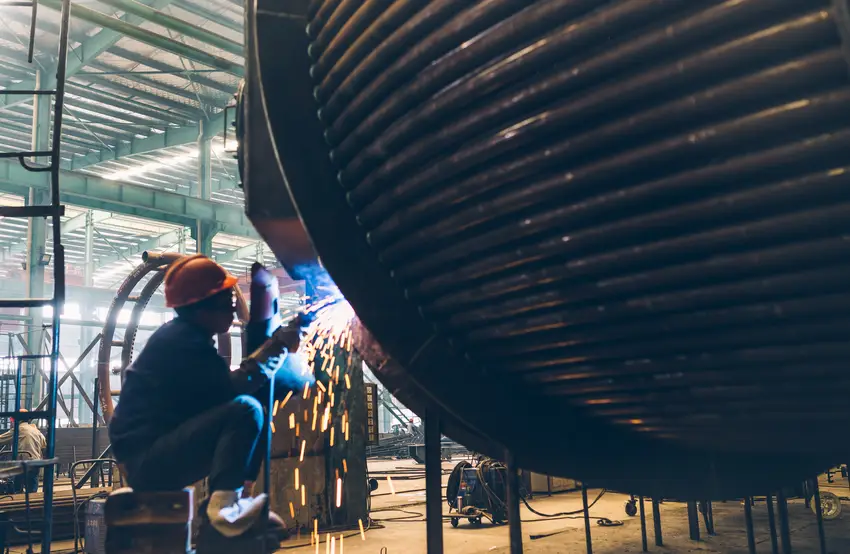
Structural iron and steel workers build the metal framework that supports bridges, skyscrapers, and other major structures. They use welding equipment, cranes, and metal cutting tools to position and connect massive steel beams and girders with precision. This job requires teamwork with crane operators and other construction professionals to safely lift and align heavy materials hundreds of feet in the air. Workers need strong physical skills, attention to detail, and often complete apprenticeship programs to master welding and safety techniques.
Structural Iron and Steel Workers

Did you know?

Structural installers must strictly adhere to OSHA safety regulations and maintain current safety certifications, as construction sites have high injury risks and legal liability.

At a Glance

Median Wage

$68,870 Avg/yr

Growth

Fast Growing

Top Skill

Time Management

Key Responsibilities

  • Dismantle structures or equipment.
  • Cut, bend, or weld steel pieces, using metal shears, torches, or welding equipment.
  • Fasten structural steel members to hoist cables, using chains, cables, or rope.
  • Ride on girders or other structural steel members to position them, or use rope to guide them into position.
  • Unload and position prefabricated steel units for hoisting, as needed.
  • Place blocks under reinforcing bars used to reinforce floors.
  • Hold rivets while riveters use air hammers to form heads on rivets.
  • Insert sealing strips, wiring, insulating material, ladders, flanges, gauges, or valves, depending on types of structures being assembled.
  • Bolt aligned structural steel members in position for permanent riveting, bolting, or welding into place.
  • Hoist steel beams, girders, or columns into place, using cranes or signaling hoisting equipment operators to lift and position structural steel members.
  • Fabricate metal parts, such as steel frames, columns, beams, or girders, according to blueprints or instructions from supervisors.
  • Read specifications or blueprints to determine the locations, quantities, or sizes of materials required.
  • Pull, push, or pry structural steel members into approximate positions for bolting into place.
  • Force structural steel members into final positions, using turnbuckles, crowbars, jacks, or hand tools.
  • Erect metal or precast concrete components for structures, such as buildings, bridges, dams, towers, storage tanks, fences, or highway guard rails.
  • Assemble hoisting equipment or rigging, such as cables, pulleys, or hooks, to move heavy equipment or materials.
  • Connect columns, beams, and girders with bolts, following blueprints and instructions from supervisors.
  • Drive drift pins through rivet holes to align rivet holes in structural steel members with corresponding holes in previously placed members.
  • Verify vertical and horizontal alignment of structural steel members, using plumb bobs, laser equipment, transits, or levels.

Career Considerations

Safety Compliance and OSHA Requirements

Structural installers must strictly adhere to OSHA safety regulations and maintain current safety certifications, as construction sites have high injury risks and legal liability.

Physical Demands and Long-term Health Impact

This occupation requires excellent physical fitness and stamina, as workers frequently lift heavy materials, work at heights, and perform labor-intensive tasks that can impact long-term joint and back health.

Apprenticeship and Skill Development Pathways

Most structural installers enter the field through union apprenticeship programs or trade school training, which typically take 2-4 years to complete and provide both classroom instruction and hands-on experience.

Want to dig deeper?

Talk to blinky to learn more.

Start chatting
BETA
New York

25 Kent Ave, Suite 401
Brooklyn, NY
11249


North Carolina

204 N Person
Street. Raleigh, NC
27601

Australia

Level 4/80
Wentworth Ave,
Surry Hills,
Sydney, 2010