Telecommunications Line Installers
Telecommunications line installers install and repair the cables and equipment that keep our phones, internet, and TV services running smoothly. You'll work with cutting-edge fiber optic technology, lay underground cables, set up aerial lines across rivers and lakes, and operate specialized equipment to install towers and poles. This hands-on career combines technical problem-solving with outdoor work, often involving travel to different job sites and direct interaction with customers. Strong mechanical skills, attention to detail, and the ability to work at heights are essential for success in this field.
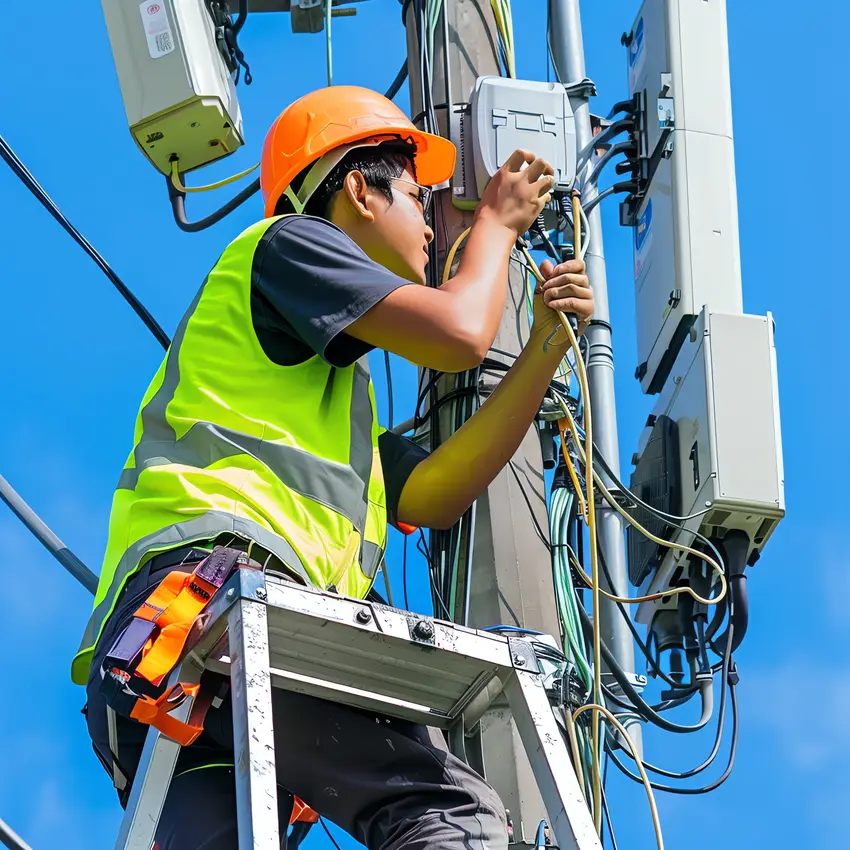
Did you know?
This occupation requires extensive safety training and physical fitness due to working with high-voltage electrical systems, climbing poles, and working in various weather conditions.
At a glance
Typical average pay
$69,700 Avg/yr
Growth
Stable
Top skill
Speaking
Things to consider
Technological Evolution
Continuous learning is essential as the telecommunications industry rapidly evolves from traditional copper lines to fiber optic networks and 5G technology.
Job Market Stability
Employment prospects remain stable in the US due to ongoing infrastructure upgrades and the critical need for reliable telecommunications services.
Key responsibilities
Access specific areas to string lines, or install terminal boxes, auxiliary equipment, or appliances, using bucket trucks, climbing poles or ladders, or entering tunnels, trenches, or crawl spaces.
Lay underground cable directly in trenches, or string it through conduits running through trenches.
Dig trenches for underground wires or cables.
Explain cable service to subscribers after installation, and collect any installation fees due.
Travel to customers' premises to install, maintain, or repair audio and visual electronic reception equipment or accessories.