Telecommunications Technicians
Overview
Telecommunications technicians are the tech experts who install and fix the equipment that keeps us all connected, from internet routers in your home to complex phone systems in office buildings. They work with cutting-edge technology, troubleshooting network issues, setting up new installations, and ensuring everything runs smoothly so people can stay connected. This hands-on career combines technical problem-solving with customer service, as technicians often explain how equipment works to clients. Many technicians start with a high school diploma and learn through on-the-job training or technical certification programs.
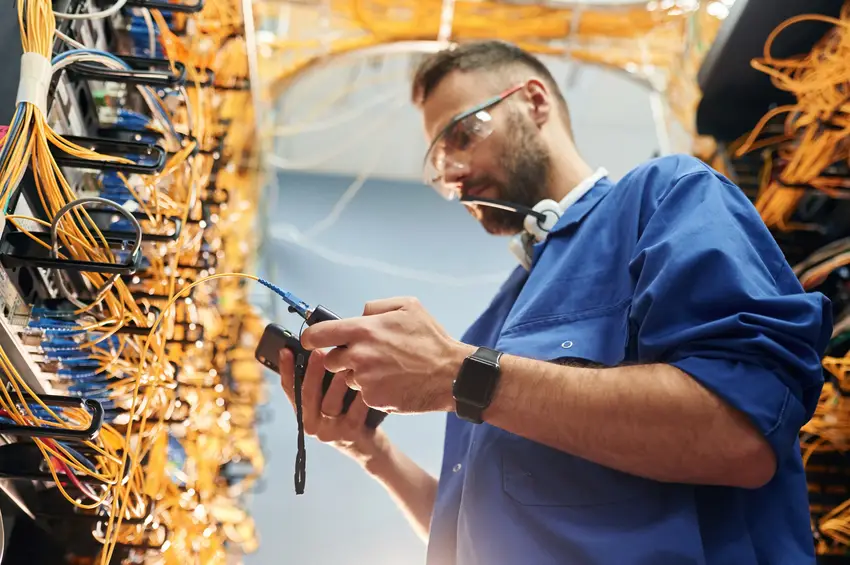
Did you know?
The rapid evolution of telecommunications technology, including 5G networks and fiber optic systems, demands ongoing education and certification to remain competitive in the American job market.
At a Glance
Median Wage
$66,819.22 Avg/yr
Growth
Stable
Top Skill
Systems Evaluation
Key Responsibilities
- Examine telephone transmission facilities to determine requirements for new or additional telephone services.
- Diagnose and correct problems from remote locations, using special switchboards to find the sources of problems.
- Inspect equipment on a regular basis to ensure proper functioning.
- Demonstrate equipment to customers and explain its use, responding to any inquiries or complaints.
- Collaborate with other workers to locate and correct malfunctions.
- Determine viability of sites through observation, and discuss site locations and construction requirements with customers.
- Climb poles and ladders, use truck-mounted booms, and enter areas such as manholes and cable vaults to install, maintain, or inspect equipment.
- Remove loose wires and other debris after work is completed.
- Review manufacturer's instructions, manuals, technical specifications, building permits, and ordinances to determine communication equipment requirements and procedures.
- Test connections to ensure that power supplies are adequate and that communications links function.
- Repair or replace faulty equipment, such as defective and damaged telephones, wires, switching system components, and associated equipment.
- Refer to manufacturers' manuals to obtain maintenance instructions pertaining to specific malfunctions.
- Designate cables available for use.
- Address special issues or situations, such as illegal or unauthorized use of equipment, or cases of electrical or acoustic shock.
- Test repaired, newly installed, or updated equipment to ensure that it functions properly and conforms to specifications, using test equipment and observation.
- Perform routine maintenance on equipment, including adjusting and lubricating components and painting worn or exposed areas.
- Route and connect cables and lines to switches, switchboard equipment, and distributing frames, using wire-wrap guns or soldering irons to connect wires to terminals.
- Run wires between components and to outside cable systems, connecting them to wires from telephone poles or underground cable accesses.
- Measure distances from landmarks to identify exact installation sites for equipment.
- Clean and maintain tools, test equipment, and motor vehicles.
- Adjust or modify equipment to enhance equipment performance or to respond to customer requests.
- Remove and replace plug-in circuit equipment.
- Provide input into the design and manufacturing of new equipment.
- Install updated software and programs that maintain existing software or provide requested features, such as time-correlated call routing.
- Remove and remake connections to change circuit layouts, following work orders or diagrams.
- Perform database verifications, using computers.
- Drive crew trucks to and from work areas.
- Clean switches and replace contact points, using vacuum hoses, solvents, and hand tools.
- Analyze test readings, computer printouts, and trouble reports to determine equipment repair needs and required repair methods.
- Assemble and install communication equipment such as data and telephone communication lines, wiring, switching equipment, wiring frames, power apparatus, computer systems, and networks.
- Dig holes or trenches as necessary for equipment installation and access.
- Program computerized switches and switchboards to provide requested features.
- Maintain computer and manual records pertaining to facilities and equipment.
- Note differences in wire and cable colors so that work can be performed correctly.
- Install telephone station equipment, such as intercommunication systems, transmitters, receivers, relays, and ringers, and related apparatus, such as coin collectors, telephone booths, and switching-key equipment.
- Request support from technical service centers when on-site procedures fail to solve installation or maintenance problems.
- Enter codes needed to correct electronic switching system programming.
- Communicate with bases, using telephones or two-way radios to receive instructions or technical advice, or to report equipment status.
- Test circuits and components of malfunctioning telecommunications equipment to isolate sources of malfunctions, using test meters, circuit diagrams, polarity probes, and other hand tools.
Career Considerations
Continuous Technical Training Required
The rapid evolution of telecommunications technology, including 5G networks and fiber optic systems, demands ongoing education and certification to remain competitive in the American job market.
Physical Demands and Safety Protocols
This occupation requires working in confined spaces, climbing, and handling electrical equipment, making physical fitness and adherence to OSHA safety standards essential for success.
Strong Job Growth Prospects
The Bureau of Labor Statistics projects favorable employment growth due to expanding broadband infrastructure and increasing demand for high-speed internet services across America.