Terrazzo Workers and Finishers
Overview
Terrazzo workers create beautiful, long-lasting floors and surfaces by mixing cement, sand, colorful pigments, and marble chips into artistic patterns. You'll use power grinders, polishing machines, and precision measuring tools to craft custom surfaces for buildings, from shopping malls to luxury hotels. This hands-on career combines technical skills with creativity, as you build wooden molds, blend materials to exact specifications, and polish surfaces to a mirror-like finish. Many workers learn through apprenticeships or vocational programs, and you'll often collaborate with construction teams to bring architectural visions to life.
Did you know?
Becoming a terrazzo artisan typically requires completing an apprenticeship program or attending specialized trade schools, as this craft demands both technical skills in mixing materials and artistic abilities for design work.
At a Glance
Median Wage
$61,845 Avg/yr
Growth
Stable
Top Skill
Social Perceptiveness
Key Responsibilities
- Signal truck driver to position truck to facilitate pouring concrete and move chute to direct concrete on forms.
- Build wooden molds, clamping molds around areas to be repaired, or setting up frames to the proper depth and alignment.
- Fill slight grinding depressions with matching grout material and hand-trowel for a smooth, uniform surface.
- Blend marble chip mixtures, place into panels, and push a roller over the surface to embed the chips.
- Measure designated amounts of ingredients for terrazzo or grout, according to standard formulas and specifications, using graduated containers and scales, and load ingredients into portable mixer.
- Spread, level, or smooth concrete or terrazzo mixtures to form bases or finished surfaces, using rakes, shovels, hand or power trowels, hand or power screeds, or floats.
- Chip, scrape, or grind high spots, ridges, or rough projections to finish concrete, using pneumatic chisel, hand chisel, or other hand tools.
- Spread roofing paper on surface of foundation and spread concrete onto roofing paper with trowel to form terrazzo base.
- Produce rough concrete surface, using broom.
- Position and secure moisture membrane and wire mesh in preparation for pouring base materials for terrazzo installation.
- Wet surface to prepare for bonding, fill holes and cracks with grout or slurry, and smooth with a trowel.
- Repair concrete by cutting out damaged areas, drilling holes for reinforcing rods, and positioning reinforcing rods, using power saw and drill.
- Remove frames when the foundation is dry.
- Mix cement, sand, and water to produce concrete, grout, or slurry, using hoe, trowel, tamper, scraper, or concrete-mixing machine.
- Sprinkle colored marble or stone chips, powdered steel, or coloring powder over surface to produce prescribed finish.
- Precast terrazzo blocks in wooden forms.
- Cut metal division strips and press them into the terrazzo base for joints or changes of color to form designs or patterns or to help prevent cracks.
- Wet concrete surface and rub with stone to smooth surface and obtain specified finish.
- Mold expansion joints and edges, using edging tools, jointers, or straightedges.
- Modify mixing, grouting, grinding, or cleaning procedures, according to type of installation or material used.
- Clean chipped area, using wire brush, and feel and observe surface to determine if it is rough or uneven.
- Wash polished terrazzo surface, using cleaner and water, and apply sealer and curing agent according to manufacturer's specifications, using brush or sprayer.
- Move terrazzo installation materials, tools, machines, or work devices to work areas, manually or using wheelbarrow.
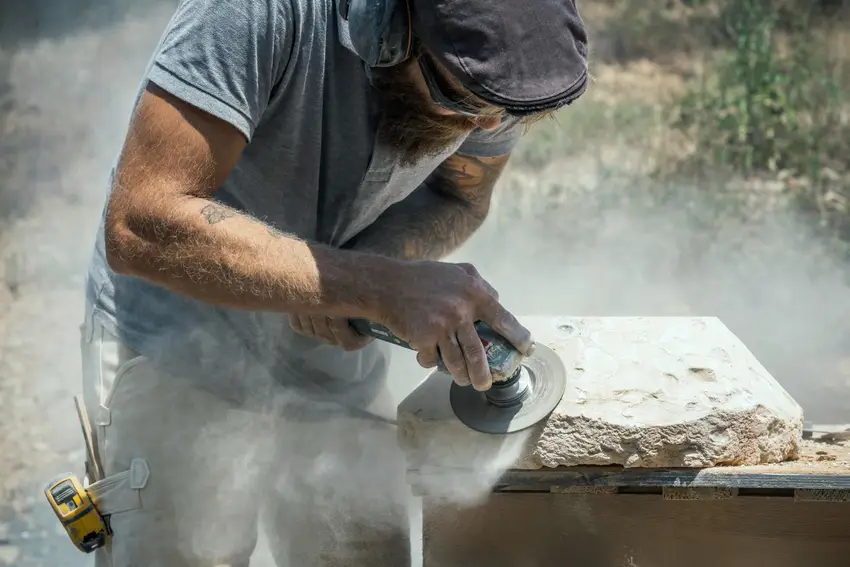
- Grind surfaces with a power grinder, or polish surfaces with polishing or surfacing machines.
- Grind curved surfaces or areas inaccessible to surfacing machine, such as stairways or cabinet tops, with portable hand grinder.
- Clean installation site, mixing and storage areas, tools, machines, and equipment, and store materials and equipment.
Career Considerations
Specialized Training Requirements
Becoming a terrazzo artisan typically requires completing an apprenticeship program or attending specialized trade schools, as this craft demands both technical skills in mixing materials and artistic abilities for design work.
Physical Demands and Health Considerations
The work involves extensive kneeling, lifting heavy materials, and exposure to dust and chemicals, requiring good physical condition and adherence to safety protocols to prevent respiratory and musculoskeletal issues.
Niche Market with Variable Demand
Terrazzo work represents a specialized segment of the construction industry with demand tied to commercial construction, renovation projects, and high-end residential work, making income potentially variable based on economic cycles.