
Tire Repairers and Changers

Overview

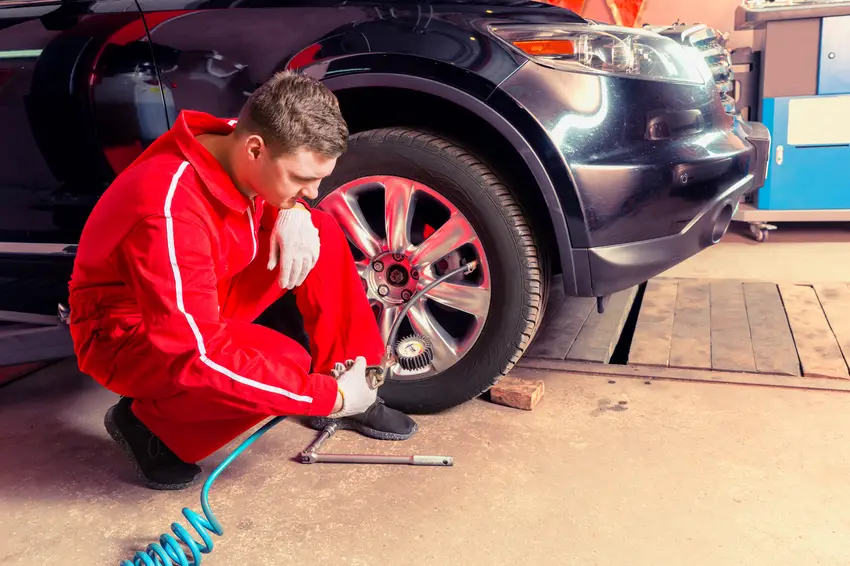
Tire repairers and changers keep vehicles safe by fixing flat tires, replacing worn tires, and ensuring wheels are properly balanced. They use hydraulic jacks, computerized balancing machines, and various hand tools to remove wheels, patch punctures, install new tires, and add precise counterweights for smooth driving. This hands-on job requires mechanical skills, attention to detail, and the ability to work in automotive shops, tire stores, or mobile service units. Many professionals in this field start with on-the-job training or automotive programs and can advance to shop management or specialized services.
Tire Repairers and Changers

Did you know?

The role requires significant physical strength for lifting heavy tires and working in potentially hazardous conditions with machinery and chemicals, making workplace safety training essential.

At a Glance

Median Wage

$37,721.57 Avg/yr

Growth

Fast Growing

Top Skill

Instructing

Key Responsibilities

  • Order replacements for tires or tubes.
  • Drive automobile or service trucks to industrial sites to provide services or respond to emergency calls.
  • Clean and tidy up the shop.
  • Inspect tire casings for defects, such as holes or tears.
  • Apply rubber cement to buffed tire casings prior to vulcanization process.
  • Prepare rims and wheel drums for reassembly by scraping, grinding, or sandblasting.
  • Patch tubes with adhesive rubber patches or seal rubber patches to tubes, using hot vulcanizing plates.
  • Rotate tires to different positions on vehicles, using hand tools.
  • Identify tire size and ply and inflate tires accordingly.
  • Glue tire patches over ruptures in tire casings, using rubber cement.
  • Reassemble tires onto wheels.
  • Place wheels on balancing machines to determine counterweights required to balance wheels.
  • Clean sides of whitewall tires.
  • Hammer required counterweights onto rims of wheels.
  • Locate punctures in tubeless tires by visual inspection or by immersing inflated tires in water baths and observing air bubbles.
  • Raise vehicles, using hydraulic jacks.
  • Seal punctures in tubeless tires by inserting adhesive material and expanding rubber plugs into punctures, using hand tools.
  • Assist mechanics and perform various mechanical duties, such as changing oil or checking and replacing batteries.
  • Remount wheels onto vehicles.
  • Buff defective areas of inner tubes, using scrapers.
  • Inflate inner tubes and immerse them in water to locate leaks.
  • Separate tubed tires from wheels, using rubber mallets and metal bars or mechanical tire changers.
  • Unbolt and remove wheels from vehicles, using lug wrenches or other hand or power tools.
  • Replace valve stems and remove puncturing objects.

Career Considerations

Physical Demands and Safety Requirements

The role requires significant physical strength for lifting heavy tires and working in potentially hazardous conditions with machinery and chemicals, making workplace safety training essential.

Career Advancement Opportunities

Experienced tire technicians can advance to supervisory roles, specialize in commercial fleet services, or transition to automotive service management positions within the growing American automotive service industry.

Job Market Stability and Earning Potential

The profession offers steady employment due to consistent vehicle maintenance needs across America, with earning potential varying significantly between independent shops and major retail chains or dealerships.

Want to dig deeper?

Talk to blinky to learn more.

Start chatting
BETA
New York

25 Kent Ave, Suite 401
Brooklyn, NY
11249


North Carolina

204 N Person
Street. Raleigh, NC
27601

Australia

Level 4/80
Wentworth Ave,
Surry Hills,
Sydney, 2010