Urban and Regional Planners
Overview
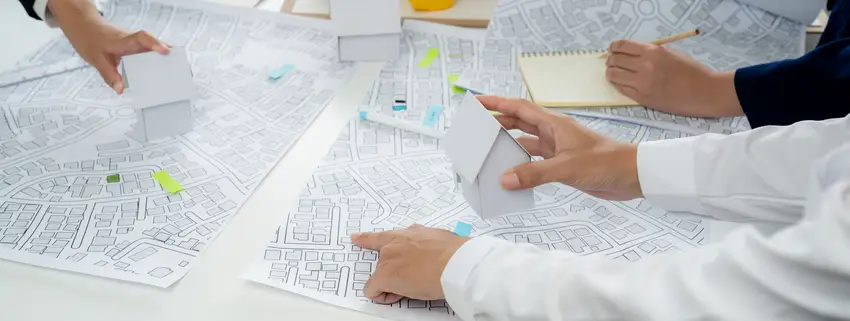
Urban and regional planners design the layout and development of communities, from small towns to major cities. They analyze data using GIS software and conduct field research to understand how areas can grow while protecting the environment and meeting residents' needs. These professionals collaborate with government officials, developers, and community members to review development proposals and create plans that balance housing, transportation, and green spaces. Many planners work in both office settings and out in the field, often with flexible schedules that include evening community meetings.
Did you know?
Most urban planning positions in the US require a master's degree in urban planning from an accredited program, making advanced education essential for career entry.
At a Glance
Median Wage
$78,997.45 Avg/yr
Growth
Stable
Top Skill
Programming
Key Responsibilities
- Hold public meetings with government officials, social scientists, lawyers, developers, the public, or special interest groups to formulate, develop, or address issues regarding land use or community plans.
- Advise planning officials on project feasibility, cost-effectiveness, regulatory conformance, or possible alternatives.
- Investigate property availability for purposes of development.
- Respond to public inquiries and complaints.
- Conduct interviews, surveys and site inspections concerning factors that affect land usage, such as zoning, traffic flow and housing.
- Develop plans for public or alternative transportation systems for urban or regional locations to reduce carbon output associated with transportation.
- Mediate community disputes or assist in developing alternative plans or recommendations for programs or projects.
- Advocate sustainability to community groups, government agencies, the general public, or special interest groups.
- Conduct field investigations, surveys, impact studies, or other research to compile and analyze data on economic, social, regulatory, or physical factors affecting land use.
- Assess the feasibility of land use proposals and identify necessary changes.
- Keep informed about economic or legal issues involved in zoning codes, building codes, or environmental regulations.
- Evaluate proposals for infrastructure projects or other development for environmental impact or sustainability.
- Identify opportunities or develop plans for sustainability projects or programs to improve energy efficiency, minimize pollution or waste, or restore natural systems.
- Review and evaluate environmental impact reports pertaining to private or public planning projects or programs.
- Research, compile, analyze and organize information from maps, reports, investigations, and books for use in reports and special projects.
- Coordinate work with economic consultants or architects during the formulation of plans or the design of large pieces of infrastructure.
- Discuss with planning officials the purpose of land use projects, such as transportation, conservation, residential, commercial, industrial, or community use.
- Prepare, maintain and update files and records, including land use data and statistics.
- Prepare, develop and maintain maps and databases.
- Prepare reports, using statistics, charts, and graphs, to illustrate planning studies in areas such as population, land use, or zoning.
- Supervise or coordinate the work of urban planning technicians or technologists.
- Determine the effects of regulatory limitations on land use projects.
- Design, promote, or administer government plans or policies affecting land use, zoning, public utilities, community facilities, housing, or transportation.
- Create, prepare, or requisition graphic or narrative reports on land use data, including land area maps overlaid with geographic variables, such as population density.
- Recommend approval, denial, or conditional approval of proposals.
Career Considerations
Educational Requirements
Most urban planning positions in the US require a master's degree in urban planning from an accredited program, making advanced education essential for career entry.
Public Sector Employment
The majority of urban planners work for local, state, or federal government agencies, requiring familiarity with public administration and government processes.
Community Engagement Skills
American planning culture emphasizes public participation and stakeholder involvement, making strong communication and facilitation skills crucial for success.