
Vision Rehabilitation Therapists and Mobility Specialists

Overview

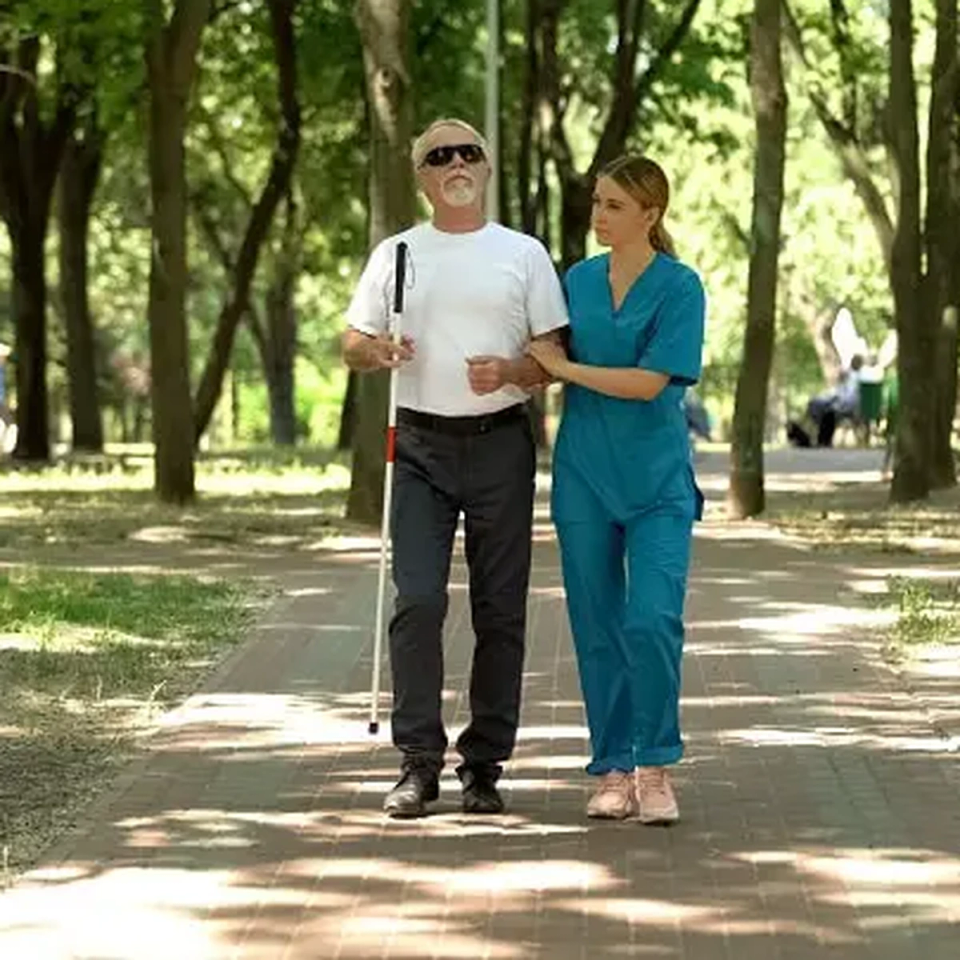
Vision Rehabilitation Therapists and Mobility Specialists help people who are blind or have low vision learn practical skills to live more independently at home, at school, at work, and in the community. They assess each person’s abilities and goals, then design a custom plan that can include learning cane techniques, using guide dogs or electronic travel aids, reading and writing Braille, and using adaptive tools like screen readers, magnification software, and talking book devices. They also coach families and teachers, adjust plans as clients improve, and coordinate with other professionals, such as occupational therapists and eye doctors, to make sure the person has the tools, training, and support they need to navigate life confidently.
Vision Rehabilitation Therapists and Mobility Specialists

Did you know?

These professions require specialized certification through organizations like the Academy for Certification of Vision Rehabilitation Therapy Professionals (ACVREP) and may need state licensing depending on the jurisdiction.

At a Glance

Growth

Stable

Top Skill

Operation and Control

Key Responsibilities

  • Administer tests and interpret test results to develop rehabilitation plans for clients.
  • Write reports or complete forms to document assessments, training, progress, or follow-up outcomes.
  • Teach independent living skills or techniques, such as adaptive eating, medication management, diabetes management, and personal management.
  • Refer clients to services, such as eye care, health care, rehabilitation, and counseling, to enhance visual and life functioning or when condition exceeds scope of practice.
  • Monitor clients' progress to determine whether changes in rehabilitation plans are needed.
  • Assess clients' functioning in areas such as vision, orientation and mobility skills, social and emotional issues, cognition, physical abilities, and personal goals.
  • Design instructional programs to improve communication, using devices such as slates and styluses, braillers, keyboards, adaptive handwriting devices, talking book machines, digital books, and optical character readers (OCRs).
  • Teach cane skills, including cane use with a guide, diagonal techniques, and two-point touches.
  • Train clients to use tactile, auditory, kinesthetic, olfactory, and proprioceptive information.
  • Recommend appropriate mobility devices or systems, such as human guides, dog guides, long canes, electronic travel aids (ETAs), and other adaptive mobility devices (AMDs).
  • Provide consultation, support, or education to groups such as parents and teachers.
  • Collaborate with specialists, such as rehabilitation counselors, speech pathologists, and occupational therapists, to provide client solutions.
  • Obtain, distribute, or maintain low vision devices.
  • Participate in professional development activities, such as reading literature, continuing education, attending conferences, and collaborating with colleagues.
  • Identify visual impairments related to basic life skills in areas such as self care, literacy, communication, health management, home management, and meal preparation.
  • Train clients to use adaptive equipment, such as large print, reading stands, lamps, writing implements, software, and electronic devices.
  • Train clients to read or write Braille.
  • Develop rehabilitation or instructional plans collaboratively with clients, based on results of assessments, needs, and goals.
  • Train clients with visual impairments to use mobility devices or systems, such as human guides, dog guides, electronic travel aids (ETAs), and other adaptive mobility devices (AMDs).
  • Teach clients to travel independently, using a variety of actual or simulated travel situations or exercises.
  • Teach self-advocacy skills to clients.

Career Considerations

Certification and Licensing Requirements

These professions require specialized certification through organizations like the Academy for Certification of Vision Rehabilitation Therapy Professionals (ACVREP) and may need state licensing depending on the jurisdiction.

Growing Market Demand

The aging American population and increased prevalence of vision-related conditions create expanding job opportunities in healthcare facilities, rehabilitation centers, and community organizations.

Interdisciplinary Collaboration

Success in these roles requires working closely with ophthalmologists, occupational therapists, social workers, and other healthcare professionals as part of comprehensive patient care teams.

Want to dig deeper?

Talk to blinky to learn more.

Start chatting
BETA
New York

25 Kent Ave, Suite 401
Brooklyn, NY
11249


North Carolina

204 N Person
Street. Raleigh, NC
27601

Australia

Level 4/80
Wentworth Ave,
Surry Hills,
Sydney, 2010